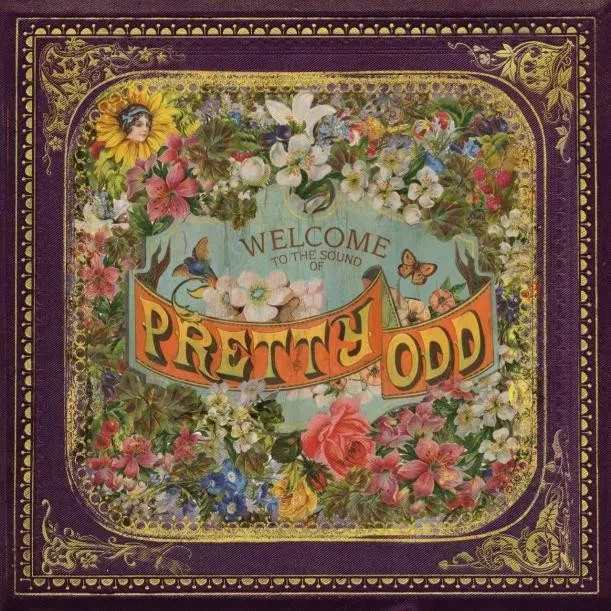
Pretty. Odd.
- Artist
- Panic! at the Disco
- Written
- Language
- Chinese, with an English translation
English translation
Machine-assisted translation of Vanessa’s Chinese original.
Pretty. Odd. has the feeling of music made with a lot of joy. There are many instruments and many melodies, and often just as I’ve remembered one line, another harmony or some brass pops up next to it. It’s occasionally a bit too full, but that eagerness to keep putting new ideas in makes it hard for me to dislike it.
We’re So Starving is like a short opening speech, with a joking tone of talking to the audience. Right after, Nine in the Afternoon pushes out piano, drums and brass together, with a melody so bright it has almost no shadow. The time in the title makes no sense, but the music is completely sure of itself, as if as long as everyone sings together, there’s no need to hurry to explain what time it actually is.
The sixties pop feeling of this album is very obvious. Acoustic guitar, piano, strings, brass and many-part harmonies are packed together, and there are often short transitions between verses and choruses. It is very different from their previous album, but listening to it, it doesn’t feel like it is trying hard to prove the change everywhere. The band seems to be genuinely interested in these sounds, and willing to decorate a song until there is something to hear in every corner.
The good thing about She’s a Handsome Woman and That Green Gentleman (Things Have Changed) is that although the arrangements are lively, the songs themselves still stand up. The rise and fall of the melody is clear, the rhythm has spring, and Brendon Urie’s voice is more willing to move along with the whole band. He can still sing very brightly, but here his voice often has a smile in it, and the drama is less tightly wound.
Northern Downpour is one I would pick out to listen to on its own. The earlier songs keep throwing things outward, and here the melody can finally slow down. The lyrics have many jumping images, and not every line can necessarily be explained exactly. But the direction of the singing is very clear: there is longing, there is worry, and there is also the meaning of not wanting the other person to leave. When the harmonies come in again and again, those lines that seem a bit obscure suddenly become easier to accept. The melody has already built the feeling for them, and the listener doesn’t need to hurry to translate word by word.
When the Day Met the Night brings the color back again. It uses the sun and the moon to write about meeting, and the swing of the acoustic guitar and the brass that unfolds behind it give this little story an almost fairy-tale seriousness. If a subject like this were handled a little stiffly, it could easily seem forced. Luckily they sing it with enough commitment, and also enough ease.
Behind the Sea lets Ryan step to the front. His lead vocal isn’t as piercing as Brendon’s, which actually suits the floating, loose feel of this song. The voices and instruments don’t have a strong main and supporting order, and many small details sway in the same space. It makes me feel that Pretty. Odd. is still a band album where you can hear the members influencing each other.
Of course, the traces of retro are sometimes too easy to spot. As soon as the strings come in and the harmonies unfold, you think of the Beatles or other sixties bands. With several short songs and interludes lined up together, attention is also bound to scatter. Its pleasantness doesn’t always come from something especially new that was discovered; sometimes it is just using a familiar method happily.
Still, from the Baroque-flavored strings of She Had the World, to the short country feeling of Folkin’ Around, to the two people trading vocals in Mad as Rabbits, these changes make me willing to accept its mix. At the close, the brass and chorus come back lively again, and the whole album seems to finally have laid out everything it wanted to say and wanted to play with.
What I like about Pretty. Odd. is also exactly that it isn’t very restrained. Those extra little phrases, those harmonies that take a detour, could really be cut sometimes, but after cutting them, the fun of this group of people trying things together might be gone too. When I listen to it, I’d rather follow the melody and leave identifying influences and explaining metaphors for later.
Chinese original
Pretty. Odd. 有一种做音乐做得很高兴的感觉。乐器很多,旋律也多,常常刚记住一个句子,旁边又冒出一段和声或铜管。它偶尔有些过满,但那种忍不住把新点子放进来的兴致,让我很难讨厌它。
We’re So Starving 像一段简短的开场白,带着对听众说话的玩笑口气。紧接着 Nine in the Afternoon 把钢琴、鼓和铜管一起推出来,旋律明亮得几乎没有阴影。歌名里的时间不合逻辑,音乐却非常确定,仿佛只要大家一起唱,就不必急着解释现在到底是几点。
这张专辑的六十年代流行乐气质很明显。木吉他、钢琴、弦乐、铜管和多声部和声填在一起,主歌与副歌之间也常有短小的过渡。它和前作的变化很大,但听着并没有处处用力证明转型。乐队似乎真的对这些声音产生了兴趣,愿意把一首歌装饰到每个角落都有东西可听。
She’s a Handsome Woman 和 That Green Gentleman (Things Have Changed) 的好处在于,编曲虽然热闹,歌曲本身仍然立得住。旋律的起落清楚,节奏有弹性,Brendon Urie 的声音也更愿意跟着整支乐队一起动。他依然能唱得很亮,不过这里的声线常常带着笑意,戏剧性没有那么紧绷。
Northern Downpour 是我会单独留下来听的一首。前面的歌不断往外抛东西,到这里,旋律终于能够慢一点。歌词有很多跳跃的意象,未必每一句都能被解释得很确切。但歌唱的方向很清楚,有眷恋,有担心,也有不愿意对方离开的意思。和声反复进入的时候,那些看起来有些晦涩的句子会突然变得容易接受。旋律已经替它们建立了情绪,听者不必忙着逐字翻译。
When the Day Met the Night 又把色彩加了回来。它用太阳和月亮写相遇,木吉他的摇摆与后面展开的铜管,让这个小故事有一种近乎童话的认真。这样的题材如果稍微端着一点,很容易显得做作。好在他们唱得足够投入,也足够轻松。
Behind the Sea 让 Ryan 站到前面。他的主唱不如 Brendon 那么有穿透力,反而适合这首歌漂浮、松散的样子。人声与乐器没有很强的主次,许多小细节在同一个空间里晃动。它让我觉得 Pretty. Odd. 仍然是一张能听见成员彼此影响的乐队专辑。
当然,复古的痕迹有时也太容易辨认。弦乐一进来,和声一展开,就会想到 Beatles 或其他六十年代乐队。几首短歌与过场排在一起,注意力也难免分散。它的好听并不总来自特别新鲜的发现,有时就是把已经很熟悉的办法用得很开心。
不过,从 She Had the World 带着巴洛克气息的弦乐,到 Folkin’ Around 短促的乡村感,再到 Mad as Rabbits 里两个人交替的歌声,这些变化让我愿意接受它的杂。收尾时,铜管和合唱又热热闹闹地回来,整张专辑像终于把所有想说的、想玩的东西都摊开了。
我喜欢 Pretty. Odd. 的地方,也正在于它不太节制。那些多出来的小乐句、多绕一下的和声,有时候确实可以删,但删完以后,可能也就少了这群人一起尝试的乐趣。听它时,我更愿意跟着旋律走,把辨认影响和解释隐喻的事情放到后面。