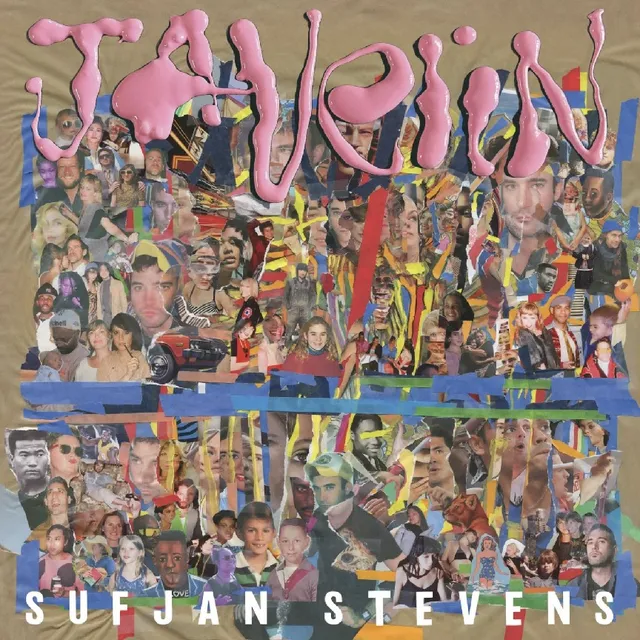
Javelin
- Artist
- Sufjan Stevens
- Written
- Language
- Chinese, with an English translation
English translation
Machine-assisted translation of Vanessa’s Chinese original.
What draws me most to Javelin is the relationship between Sufjan’s voice and the sounds around it. He still sings very softly, and sometimes at the end of a line it feels like his breath is about to scatter along with it. But the accompaniment doesn’t always stay quiet with him. The drums suddenly get heavy, electronic sounds break in, the harmonies pile up until one person’s whisper turns into a crowd singing together.
When I listen to Carrie & Lowell, I often notice the gaps between the sounds. Javelin is clearly more willing to fill those gaps. It has acoustic guitar and piano, and also full voices, percussion and electronic sounds that aren’t very tame. Several things that might not sound like they get along are put into the same song.
I like this a lot. Singing softly can carry a lot of feeling, anger, urgency, even losing control, without needing a louder voice to express it. Goodbye Evergreen does this in a little over three minutes.
The opening piano is very simple and the voice is close, almost getting you ready for another quiet folk album. Then the beat and electronic sounds suddenly press in, and the song gets much bigger all at once. The turn isn’t smooth, it’s even a little rough, but it works well here. The goodbye before still seemed like something that could be explained clearly, but the sounds that come after already refuse to cooperate.
I’d rather hear it as an emotional loss of control. Sufjan’s own way of singing doesn’t change much, and the arrangement does the collapse for him. And precisely because he doesn’t sing harder along with it, the gap between the sounds is more noticeable.
Next, A Running Start becomes light again. The plucked strings keep moving forward, and the harmonies and small ornamental sounds make the whole song feel airy. The natural scenery in the lyrics and the wish for a kiss also keep a bit of the excitement of a love that has just begun.
The placement of this song is good. The opener has already said goodbye, but the second song still has so much wanting to get close. Because of this, time on the album doesn’t move forward in order. Goodbye and a flutter of feeling can appear right next to each other, and it doesn’t sound contradictory.
When Javelin was released in 2023, Sufjan dedicated it to his partner Evans Richardson, who died that year.
Will Anybody Ever Love Me? is one of the songs on the album that grabs you most quickly.
The title asks so directly that it makes you a little uncomfortable. The images in the verses are far more intense, with a sense of self-punishment and purification, but at the chorus it falls back to a question anyone can understand. The melody opens up here too, and the percussion and many voices singing together give the song a force that stretches outward.
I especially like that it doesn’t sing this question as something pitiful. That longing is fragile, of course, but as other voices join it also becomes frank, even a little justified. Wanting to be loved is allowed to be sung out properly.
The many voices singing together are a very important part of Javelin. Sometimes they stay close to the main melody, sometimes they draw out long notes behind it, sometimes they seem to answer Sufjan. The lead voice stays thin throughout while the surroundings get thicker and thicker, and this difference lets closeness and openness exist at the same time.
Everything That Rises and Genuflecting Ghost continue this approach. The repeated phrases and layered voices have the feeling of a hymn, but the electronic sounds make them less settled. Especially in the later part of Genuflecting Ghost, the sound starts to get restless, and the softness built up earlier doesn’t last the whole way.
These places make me feel that the religious feeling in Javelin also comes largely from the music itself. Repetition, response and singing together give a person’s confusion a shared way of being sung. Even without explaining the religious images in the lyrics one by one, you can hear the urgency of asking for an answer.
My Red Little Fox is softer. The piano’s three-beat time has a gentle rocking feeling, the melody slowly lifts, and the voice spreads out behind it. It puts affectionate names, the desire to kiss and religious language together, and it sounds very natural. For Sufjan, physical closeness and spiritual dependence always seem to sit very near each other.
Still, listening to this stretch straight through, you also notice a similarity in how the arrangements are thought out. It starts quietly, gradually adds harmonies, then pushes the sound somewhere fuller. Each one is beautiful on its own, but put together, a few of the buildups really can be guessed in advance. Luckily the melodies and rhythms are different enough that this familiarity didn’t get boring.
What moves me in So You Are Tired is that it doesn’t rush to push the emotion up.
The piano gives a steady, slow support, and Sufjan’s singing leaves a lot of room. The lyrics look back at a relationship of fourteen years, with doubt, with reluctance, and with the numbness of already knowing it’s over while the feeling isn’t over yet. The repeated phrases make the song feel like it is confirming, bit by bit, something it doesn’t want to accept.
The restraint here is important. If it were sung more fiercely, the song might turn into an accusation. The way it is sung now keeps the hesitation. He seems to still have questions to ask, and also knows that asking them may not help.
As the harmonies and accompaniment gradually join in, the whole song gets fuller, but the tiredness at the start doesn’t go away. I think this is where it is more accurate than plain sadness. When a relationship ends, you don’t always have enough energy left to express all your feelings completely.
The title track Javelin (To Have And To Hold) is under two minutes, like a pause squeezed between two long songs. The sound is soft, but the lyrics have the image of throwing a javelin and nearly hurting someone. Placed here, it lets the narrator on the album show his own aggression too. The one who has been asking to be loved can also hurt other people.
This song doesn’t develop much, and it leaves an uncomfortable aftertaste. It ends quickly, but that thought gets carried into the next song.
Shit Talk is the most fully developed piece on the whole album.
At over eight minutes, it has enough room to build up slowly. The guitar loop keeps a feeling of moving forward, other parts enter one after another, and the repeated phrases get heavier along the way. The lyrics have love and also the tiredness of no longer being able to stay together, and the tone is not always the same.
Toward the end, he leaves this line again and again.
I don’t wanna fight at all.
It has no rhetoric in itself, but among the voices and accompaniment that keep increasing, it carries more and more weight. The first time I heard it, it sounded like stating a position; after a few more listens, it sounded like a request, or like trying to convince himself.
This is where repetition really works. The same line gives no new information, but the changes in the sounds around it keep changing it. The earlier songs also used the method of stacking layer by layer, and Shit Talk does this more slowly and more completely, letting the listener stay inside it.
I really like its long outro. After the words stop, the music goes on for a while. The feeling just before was too dense, and it really does need this stretch as a buffer. It also lets the last song, There’s a World, land gently, with no need to make a bigger climax.
There’s a World is very short and lightly arranged. Placed here, it has the feeling of finally being able to turn your attention elsewhere. After listening to the whole album, when you think back to that sudden outburst at the opening, you find that the calm at the end did not come easily.
What moves me most about Javelin is still that it doesn’t treat singing softly as the only way to express things. Sufjan’s voice is very suited to telling private things, but the arrangements keep carrying those words outward. The harmonies, drums and electronic sounds sometimes support him and sometimes almost drown him.
This also puts distance between it and Carrie & Lowell. By the end of Javelin, what I remember is not only what he sang but also how those sounds joined in, bit by bit. One person speaks first, and the others follow. The question still hasn’t been answered, but by the end of the singing, it is no longer only his voice.
Chinese original
Javelin 最吸引我的,是 Sufjan 的声音和周围那些声音的关系。他还是唱得很轻,有时候一句话快结束了,气息也像要跟着散掉。但伴奏并不总是陪他一起安静。鼓点会突然变重,电子音色会闯进来,和声越叠越多,最后把一个人的低语变成一群人的合唱。
听 Carrie & Lowell 的时候,我常常会注意到声音之间的空隙。Javelin 则明显更愿意把这些空隙填上。它有木吉他和钢琴,也有饱满的人声、打击乐和不太温顺的电子声响。几种听起来不一定相处得来的东西,被他放在了同一首歌里。
这让我很喜欢。轻声唱歌也可以有很多情绪,愤怒、急切,甚至失控,不一定非得靠提高嗓门来表达。Goodbye Evergreen 在三分多钟里就把这件事做了一遍。
开头的钢琴很简单,人声也近,几乎让人做好了再听一张安静民谣专辑的准备。随后节拍和电子声响突然压进来,歌曲的体积一下变大。这个转折并不圆滑,甚至有些粗暴,但放在这里很有效。前面的告别还像是能够被说清楚的事,后面的声音却已经不肯好好配合了。
我更愿意把它听成一种情绪上的失控。Sufjan 本人的唱法变化不算大,编曲替他完成了那一下崩塌。也正因为他没有跟着用力唱,声音之间的落差才更明显。
接下来的 A Running Start 又轻了下来。拨弦不断向前,和声与细碎的装饰音让整首歌显得轻盈。歌词里的自然景物和亲吻的愿望,也让它保留了一点恋爱刚开始时的兴奋。
这首歌的位置很好。开场已经说了再见,第二首却还有这么多想靠近的心情。专辑里的时间因此没有按部就班地往前走。告别和心动可以紧挨着出现,听起来也并不矛盾。
2023年发行 Javelin 时,Sufjan 将它献给了当年去世的伴侣 Evans Richardson。
Will Anybody Ever Love Me? 是整张专辑里最容易一下抓住人的歌之一。
歌名问得太直接,反而让人有些不自在。主歌里的意象要激烈得多,带着自我惩罚和净化的意味,到了副歌,却落回一个谁都听得懂的问题。旋律也在这里打开,打击乐和多人和声让歌曲逐渐有了向外伸展的力量。
我尤其喜欢它没有把这个问题唱得很可怜。那种渴望当然脆弱,但随着其他声音加入,它也变得坦率,甚至有一点理直气壮。想被爱这件事,被允许好好唱出来。
多人和声是 Javelin 很重要的一部分。它们有时贴着主旋律,有时在后面拉出长音,有时又像在回应 Sufjan。主唱的声音始终很薄,周围却越来越厚,这种差别让亲密感和开阔感能够同时存在。
Everything That Rises 和 Genuflecting Ghost 延续了这种做法。反复的乐句和层叠的人声带着圣歌的感觉,但电子音色又让它们没那么安稳。尤其是 Genuflecting Ghost 后段,声音开始变得躁动,前面建立起来的柔和并没有一直保持下去。
这些地方让我觉得,Javelin 的宗教感很大程度上也来自音乐本身。重复、应答、合唱,都让个人的困惑有了一种共同吟唱的形式。即使不去逐个解释歌词里的宗教意象,也能听出那种请求得到回应的急切。
My Red Little Fox 则更柔软。钢琴的三拍子有轻轻摇晃的感觉,旋律慢慢抬高,人声在后面铺开。它把亲昵的称呼、接吻的欲望和宗教语言放在一起,听着很自然。对 Sufjan 来说,身体的亲近和精神上的依赖似乎总是挨得很近。
不过,这一段连续听下来,也会察觉到编曲思路上的相似。安静开始,逐渐加进和声,再把声音推向更饱满的地方。每首单独听都漂亮,放在一起,有几次展开确实能够提前猜到。好在旋律和节奏的差别还足够鲜明,没有让这种熟悉变得乏味。
So You Are Tired 的动人之处,在于它没有急着把情绪推起来。
钢琴给出稳定、缓慢的支撑,Sufjan 的演唱留着很多余地。歌词回望十四年的关系,有怀疑,有不甘,也有已经知道结束了、感情却还没有结束的迟钝。那些反复出现的句式,让歌曲像是在一点点确认自己不愿意接受的事情。
这里的克制很重要。如果唱得更激烈,歌曲可能就会变成一场控诉。现在这个唱法却保留了犹豫。他好像还有问题想问,又知道问完也未必有用。
随着和声与伴奏逐渐加入,整首歌越来越丰满,但最初那点疲惫没有消失。我觉得这是它比单纯的悲伤更准确的地方。关系结束时,并不总有足够的精力把所有情绪表达完整。
同名曲 Javelin (To Have And To Hold) 只有不到两分钟,像是夹在两首长歌之间的一次停顿。声音柔和,歌词却出现了投掷标枪、险些伤人的画面。放在这里,它让专辑中的叙述者也暴露出自己的攻击性。前面一直在请求爱的人,同样可能伤害别人。
这首歌没有展开太多,反而留下了不舒服的余味。它结束得很快,那个念头却会被带进下一首。
Shit Talk 是整张专辑最充分的一次展开。
八分多钟的长度,给了它足够的空间慢慢积累。吉他的循环维持着向前的感觉,其他声部陆续进入,反复的乐句也在这个过程中变重。歌词里既有爱,也有已经无法继续相处的疲惫,语气并不始终一致。
唱到后面,他反复留下这句话。
I don’t wanna fight at all.
它本身没有什么修辞,但在不断增加的人声和伴奏里,越来越有分量。第一次听像是在表明态度,再听几次,又像请求,或者是在努力说服自己。
这是重复真正起作用的地方。同一句歌词没有提供新的信息,周围声音的变化却让它一直在改变。前面那些歌曲也使用了逐层堆叠的办法,Shit Talk 则把这个过程放得更慢、更完整,让听者能够待在里面。
我很喜欢它后面的长尾声。唱词停下以后,音乐仍然持续了一段时间。刚才的情绪太密,确实需要这一段缓冲。它也让最后的 There’s a World 能够轻轻落下来,不必再制造一个更大的高潮。
There’s a World 很短,编排也轻。放在这里,有一种终于可以把注意力转向别处的感觉。听完整张专辑,再回头想开场那次突然爆发,会发现结尾的平静来得并不轻易。
Javelin 最打动我的,还是它没有把轻声演唱当成唯一的表达方式。Sufjan 的声音很适合讲私人的事,编曲却不断把这些话往外带。那些和声、鼓点和电子声响,有时支持他,有时几乎要把他淹没。
这也让它与 Carrie & Lowell 拉开了距离。听到 Javelin 最后,我记住的除了他唱了什么,还有那些声音是怎样一点点加入的。一个人先开口,其他人随后跟上。问题仍然没有得到回答,但唱到后面,已经不只是他一个人的声音了。