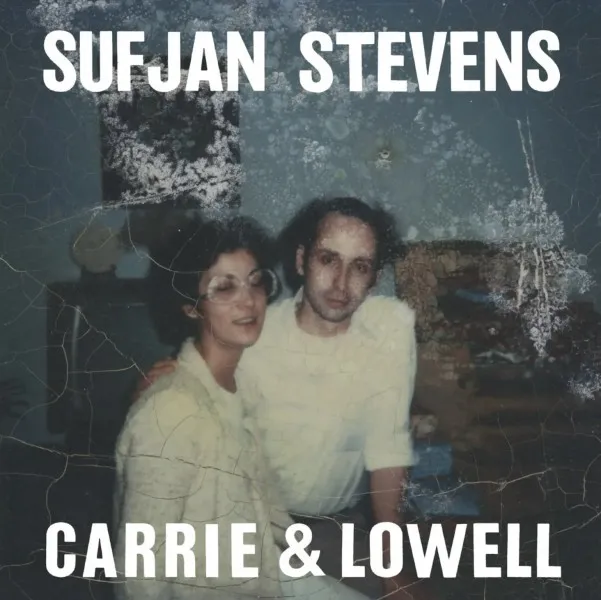
Carrie & Lowell
- Artist
- Sufjan Stevens
- Written
- Language
- Chinese, with an English translation
English translation
Machine-assisted translation of Vanessa’s Chinese original.
I Haven’t Really Gotten to Know You Yet
The picture this album brings to mind is of someone at home at the end of summer, going through old photos.
The people in the photos are dressed lightly, the sun is good, and probably nothing important was happening when they were taken. Someone isn’t looking at the camera. Someone is smiling a little strangely. If they were still around, you might not look at these photos twice. But now you wonder: when was this taken? Where did everyone go afterwards that day? Why weren’t a few more taken at the time?
It seems he no longer has the strength to tell it all over again, but he still wants to.
Carrie is his mother and Lowell is his stepfather. His mother was absent for much of his childhood, and the few summers they spent together in Oregon were some of the only time they had. Later, his mother died.
After I learned this, I started to feel that the longing on this album is hard to deal with.
If someone was always good to you, at least you know what you are missing. You can remember the meals she cooked, her way of talking, the questions she asked every day that you found annoying. But what if she wasn’t there while you grew up? What if thinking of her also means thinking of the child who was left behind?
You still miss her. You might even feel wronged for missing her this much.
In Death with Dignity, he talks about forgiving his mother very early on. But I always felt that the songs after it still have a lot left unsaid. Forgiveness can be spoken out loud one day, but the questions left over from childhood don’t disappear with it. Why didn’t you come? Why do other people have this and I don’t? I’m already grown up, so why am I still thinking about this?
In Should Have Known Better there is a childhood memory of being left behind by his mother at a video store. Details like this made it hard for me to keep treating it as just a nice-sounding song. For an adult, it may be something that happened a long time ago. For the child at the time, probably all he could do was wait.
And the regret in the title is so familiar. People seem to easily end up blaming themselves for things they were powerless to change. If only I had known, if only I had grown up sooner, but what was a child supposed to have known in advance?
When the keyboard lights up in the second half of this song, I breathe a little easier. He starts to sing about the newborn child in the family, and his attention finally leaves the place that has kept him trapped. Hearing this, I’m willing to believe he really was happy for a little while. Even if sadness comes after, that little while counts.
I really like Eugene, and I even feel it hurts more than the songs on the album that talk about death directly.
It writes about the smell of lemons, learning to swim, and small things from childhood that haven’t been forgotten. The guitar is clear and the melody is warm, and you could almost take it as ordinary nostalgia.
But he keeps wanting to get closer.
He wanted to get closer when he was little, and he still does as a grown-up. What hurts me about this is that he isn’t really asking for much. He doesn’t ask anyone to make it up to him, and he doesn’t ask for the past to be done over. He just wants to be next to that person. And even that small request could no longer be met.
Some memories weren’t even happy at the time. Maybe it was just going out together, sitting together for a while, the other person saying something offhand. After the person is gone, you find that these are the only things you have to think over again and again.
After Eugene comes Fourth of July. A moment ago it was still summer, still a small child, and the next song it is time to say goodbye.
I’m not very willing to treat Fourth of July as a song for crying hard to. What it gives me is closer to the feeling after crying, when a person is already tired but still has some things they have to keep thinking about.
The keyboard repeats over and over, and the mother and child talk to each other in the song. They call each other by very affectionate names. Hearing those names, you suddenly realize that even in a complicated family there can be very tender moments. But those moments can’t answer every question. Someone loving you and hurting you can both be true at the same time.
We’re all gonna die.
I don’t know whether this line can comfort anyone. The first time I heard it, it was cold, and I almost wondered why it had to be said right now. But as I kept listening, I felt that maybe he had nothing else to say. No sentence could make his mother stay, and no sentence could make up for the years they missed.
So all he can do is keep calling to her, keep talking to her.
As long as the song hasn’t ended, the conversation can go on a little longer.
After Fourth of July there is still nearly half the album left, because after the goodbye, the living still have many days to get through.
The thoughts in The Only Thing are already very dangerous. He thinks about hurting himself, and he is also held by certain scenes in nature. Its melody, strangely, is beautiful, and when the voices stack up there is even a feeling of being gently held up. But if you listen closely to the words, you know this person has not become safe because of it.
I like that it doesn’t write about staying alive as something certain. Sometimes what can make a person stop for the moment really is very small, so small you’re embarrassed to tell anyone. You can’t promise how tomorrow will be, you just still want to look one more time right now.
This album also has some parts that aren’t so easy to sympathize with. All of Me Wants All of You has desire, wanting something from another person, and the awkwardness of two people not looking in the same direction at all. By No Shade in the Shadow of the Cross, alcohol, the body and out-of-control thoughts are all crowded together, and it is uncomfortable to listen to.
But I think these songs should stay here.
When people are sad, they also do things they regret, they try to ask more from others, they keep going even when they know it’s no use. You can’t demand that he look clean even while falling apart just because he is losing his mother.
The intimacy in John My Beloved gives me the same feeling. He wants to be loved but has no confidence in himself; he moves toward a person, and he also turns to faith for help. I don’t think every line has to be sorted out as to who it is addressed to. Listening here, what is clearer is that he keeps speaking, that he keeps hoping something will answer him.
The guitar, keyboard and voices on the album, most of the time, don’t make much noise. After listening for a long time, a few songs do start to sound alike. But I also slowly got used to this volume. By the end, I actually didn’t want a grand passage to appear and announce for him that everything is finally over.
When Blue Bucket of Gold ends, the singing slowly gives way to drawn-out sounds. That part doesn’t explain anything more, and I don’t really want to explain it either.
I didn’t hear a person who had finally figured it all out in Carrie & Lowell. His mother still left, and what happened in his childhood still happened. He has forgiven some things, and he is still allowed to be sad about them.
If I had to say what this album made me remember, it would probably be that a person can grow up for this long and still want their mom to look at them.
Having come to understand so much, having passed so many years, having written so many songs.
Still wanting to.
Chinese original
我还没有好好认识你
这张专辑让我想到的画面,是夏天快结束时,一个人坐在家里翻照片。
照片里的人穿得很少,阳光很好,拍照的时候大概也没有发生什么重要的事。有人没有看镜头,有人笑得有些奇怪。如果他们还在身边,你可能根本不会多看这些照片。但现在你会想,这是什么时候拍的?那天后来去了哪里?为什么当时没有多拍几张?
他好像已经没有力气再把它们说一遍了,但还是想说。
Carrie 是他的母亲,Lowell 是他的继父。母亲在他成长的过程中长期缺席,小时候在俄勒冈一起度过的几个夏天,是他们少有的相处时光。后来,母亲去世了。
知道这些以后,我开始觉得,这张专辑里的思念很难办。
如果一个人一直对你好,你至少知道自己在怀念什么。你可以想起她做过的饭,她说话的习惯,她每天都会问的那些让你嫌烦的问题。但如果她没有陪你长大呢?如果你想起她,也会想起被丢下的自己呢?
你还是会想她。甚至会因为自己这么想她,感到委屈。
Death with Dignity里,他很早就说到了对母亲的原谅。可我总觉得,后面的歌还有很多话没有说完。原谅可以在某一天被说出口,小时候留下来的那些问题却不会跟着消失。为什么你没有来?为什么别人有,而我没有?我已经长这么大了,为什么还在想这些?
Should Have Known Better里有一段被母亲留在录像带商店的童年记忆。这样的细节让我很难继续把它当成一首单纯好听的歌。对成年人来说,那可能只是很久以前的一件事。对当时的孩子来说,他能做的大概只有等。
而歌名里的后悔又那么熟悉。人好像很容易把无能为力的事,最后算到自己头上。早知道就好了,早一点懂事就好了,可一个孩子到底应该提前知道什么?
这首歌后半段的键盘亮起来时,我会稍微松一口气。他开始唱到家中新出生的孩子,注意力终于离开了那个一直困着自己的地方。听到这里,我愿意相信他是真的有过一小会儿开心。哪怕之后还会难过,这一小会儿也算数。
我很喜欢Eugene,甚至觉得它比专辑里那些直接谈死亡的歌更让我难受。
它写柠檬的气味,写学游泳,写童年里一些没有被忘记的小事。吉他清亮,旋律也很亲切,你差一点就可以把它当成一次普通的怀旧。
但他一直想要靠近。
小时候想靠近,长大了还是想靠近。这件事让我难受的地方在于,他其实没有提出什么很大的要求。他没有要求谁补偿自己,也没有要求过去重新来一遍。他只是想待在那个人身边。可就是这么一点要求,后来也做不到了。
有些回忆在当时甚至算不上幸福。可能只是一起出门,一起坐了一会儿,对方随口说了一句话。等到人不在了,你才发现自己能拿出来反复想的,只有这些。
Eugene后面就是Fourth of July。刚才还是夏天,还是一个小孩,下一首就到了告别的时候。
我不太愿意把Fourth of July当成一首适合用来痛哭的歌。它给我的感觉更接近哭过以后,人已经累了,但还有一些事情不得不继续想。
键盘一遍遍重复,母亲和孩子在歌里对话。他们用很亲昵的称呼叫对方。听到这些称呼,会突然意识到,再复杂的家庭关系里,也可能有过很柔软的时刻。可这些时刻也不能回答所有问题。一个人爱过你,和她让你受过伤,是可以同时发生的。
We’re all gonna die.
我不知道这句话到底能不能安慰人。第一次听,它很冷,几乎让人觉得为什么非要现在说这个。可听着听着,又觉得他大概也没有别的话可说了。没有一句话能够让母亲留下,也没有一句话能把他们错过的那些年补回来。
于是只能继续叫她,继续跟她说话。
只要这首歌还没有结束,对话就还能再持续一会儿。
Fourth of July之后,专辑还有将近一半,因为告别之后,活着的人还有很多日子要过。
The Only Thing里的念头已经很危险了。他会想到伤害自己,也会被自然里的某些景象牵住。它的旋律偏偏很美,人声叠起来的时候,甚至有一种被轻轻托住的感觉。但听清歌词,就知道这个人并没有因此变得安全。
我喜欢它没有把活下去写得很有把握。有时候,能让人暂时停下来的东西确实很小,小到你都不好意思告诉别人。你没法保证明天怎么样,只是眼下还想再看一眼。
这张专辑里也有一些不那么容易让人同情的部分。All of Me Wants All of You里有欲望,有对另一个人的索求,也有彼此根本没有在看同一个方向的尴尬。到了No Shade in the Shadow of the Cross,酒精、身体和失控的念头挤在一起,听着很不舒服。
但我觉得这些歌应该留在这里。
人伤心的时候,也会做让自己后悔的事,会试着从别人那里要更多,会明知道没有用还是继续。不能因为他正在失去母亲,就要求他连崩溃都显得干净。
John My Beloved里的亲密也让我有这样的感觉。他想被爱,又对自己没有信心;他向人靠近,也向信仰求助。我不觉得每一句里的对象都必须分清。听到这里,更明显的是他一直在开口,一直希望有什么能够回应自己。
专辑里的吉他、键盘和人声,大部分时候都没有太大的动静。听久了,有几首确实会显得相似。但我也慢慢习惯了这个音量。到最后,反而不希望出现一个很盛大的段落,替他宣布一切终于过去了。
Blue Bucket of Gold收尾时,歌声慢慢让位给拖长的声音。那一段没有再解释什么,我也不太想替它解释。
我没有从Carrie & Lowell里听出一个终于想通了的人。母亲依然离开了,童年的事依然发生过。他已经原谅了一些事情,也仍然有权为它们难过。
如果一定要说这张专辑让我记住了什么,大概就是,一个人原来可以长大这么久,还是想让妈妈看一看自己。
知道了很多道理,过了很多年,写了很多首歌。
还是想。