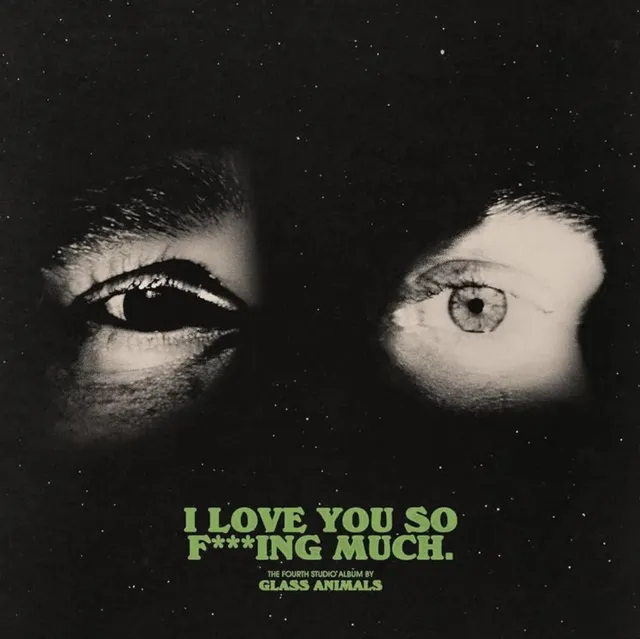
I Love You So F***ing Much
- Artist
- Glass Animals
- Written
- Language
- Chinese, with an English translation
English translation
Machine-assisted translation of Vanessa’s Chinese original.
The most obvious change on this album is that the songs have gotten bigger. The choruses have to climb very high, the synthesizers are spread wide, and the drums are more direct. Before, Glass Animals would use some strange little sounds to draw attention to the corners; this time a lot of things gather around the most eye-catching melody. It sounds smooth, and the memorable parts come quickly.
But sometimes I miss those corners. The characters in How to Be a Human Being each had their own faults, and the sound changed along with them, while this album mostly revolves around love and intimate relationships. The theme isn’t narrow, but the people in the ten songs occasionally have tones that are too similar, like one thought at several different brightnesses.
The opening of Show Pony is very appealing. Love is put back into family relationships, and how a person treats intimacy later may have been partly learned from adults long ago. Dave’s singing is light, but the melody has some insistence, and when the chorus comes back again and again, those seemingly ordinary ways of getting along also show their constraints. I like that this song doesn’t rush to blame everything on some bad person; how a relationship is maintained, and how it slowly wears down, is often harder to explain.
whatthehellishappening? writes the situation as absurd, as if being wrapped up in something out of control and somehow feeling a bit of excitement. The kidnapping setup is used to magnify this contradiction, and the song itself has a strong sense of speed. It is one of the songs on this album closest to the old Glass Animals, still willing to let humor and unease squeeze together.
Creatures in Heaven fully believes in the power of a good chorus. The voice climbs, the accompaniment opens up with it, and a certain night in memory is enlarged again and again. Dave is very good at singing this kind of intimacy that is already over while the body still remembers. The song has no very complicated turns, but the melody can really bear repetition, and as you listen you’ll want to sing along.
Wonderful Nothing is my favorite part. The opening is held back and slow, and when the low end really comes in, the whole song’s expression changes. The electronic sounds have rougher edges, the rhythm is willing to stop and swerve, and the spite in the voice finally has a sound to match. It has the feeling of having already won the argument out loud and still feeling uneasy inside. Compared with several songs that keep saying they miss someone, this kind of not very likable feeling seems fresher to me.
A Tear in Space (Airlock) pulls the sound into a more closed space again. The high voices and breath-like rhythm make the sense of being squeezed in the relationship easy to hear. The space setting is used fairly well here; distance, air and weightlessness can all map onto the state of two people being together, without needing much more explanation. It’s just that after the chorus comes back a few times, the arrangement changes only a little, and the tension at the start gets worn down a bit.
The feeling in I Can’t Make You Fall in Love Again is more direct. The title has already said the hardest thing to accept, and the remaining time is spent slowly digesting it. I like that Dave doesn’t sing especially strongly the whole way; his voice still lifts upward, still seems to be testing whether there is another possibility. Between knowing a truth and actually being able to live by it, there is always a stretch of time.
How I Learned to Love the Bomb writes about unpredictability in a relationship. The other person’s changes make you nervous, and you gradually learn to wait, to watch, even to treat this nervousness as part of getting along. The melody makes it easy to follow along, and only when you listen closely to the content do you realize that familiar doesn’t necessarily mean safe. This is one of the few places on the album where I feel the pleasantness really adds weight to the theme.
The melody of White Roses is sweet too, but by here, several familiar treatments start to feel crowded. Entering softly, gradually lifting, then letting synthesizers and drums push the chorus open: these have already been used quite a few times before. Taken on its own it isn’t bad, but placed in the whole album, its personality is weaker. I don’t mind a band writing big pop songs, I just hope different relationships would bring more different musical responses.
On the Run picks up the pace again, and repetition gives running away the momentum of not being able to stop. The last song, Lost in the Ocean, relaxes the sound, and the plainer accompaniment with harmonies gradually joining lets the person who has been floating in a huge space finally come close to the ground. The ending isn’t especially surprising, but it is necessary, and the ears also need a rest from the brightly lit production before.
I Love You So F***ing Much doesn’t lack good songs. I like that it is willing to sing feelings directly, and I also like that moment in Wonderful Nothing when it suddenly shows its teeth. It’s just that once so many sounds are made to look so pretty, the differences between the characters get smaller too. For me, what is most worth keeping from this album is still those parts that are a little out of control and not very smooth.
Chinese original
这张专辑最明显的变化,是歌变得更大了。副歌要冲得很高,合成器铺得很宽,鼓点也更直接。以前 Glass Animals 会用一些奇怪的小声音,把注意力引到角落里;这次很多东西都朝着最醒目的那条旋律集中。听起来很顺,能记住的部分来得也快。
但我有时候会想念那些角落。How to Be a Human Being 里的角色各有各的毛病,声音也跟着变,这张专辑则更多围绕爱情和亲密关系展开。主题并不窄,十首歌里的人却偶尔拥有过于相近的语气,像同一个念头换了几种亮度。
Show Pony 的开场很有吸引力。爱情被放回家庭关系里,一个人后来怎样对待亲密,可能早就从大人身上学到了一部分。Dave 的唱法轻,旋律却有一点坚持,副歌反复回来时,那些看上去很普通的相处模式也显出了束缚。我喜欢这首歌没有急着把所有问题归咎于某个坏人,关系怎样被维持,又怎样慢慢磨损,往往更难说明白。
whatthehellishappening? 把处境写得荒唐,仿佛被裹进一件失控的事里,竟然又生出一点兴奋。绑架的设定被用来放大这种矛盾,歌曲本身也有很强的速度感。它是这张专辑里比较接近旧时 Glass Animals 的一首,仍然愿意让幽默和不安挤在一起。
Creatures in Heaven 则完全相信一个好副歌的作用。人声往上走,伴奏跟着打开,回忆里的某个夜晚被不断放大。Dave 很擅长唱这种过去已经结束、身体却还记得的亲密。歌曲没有很复杂的转折,但旋律确实能承受反复,听着听着就会愿意跟着唱。
Wonderful Nothing 是我最喜欢的部分。开头留得慢,等到低频真正进来,整首歌的表情就变了。电子音有比较粗糙的边缘,节奏也愿意停一下、拐一下,人声里的恶意终于有了对应的声音。它带着一种嘴上已经吵赢、心里仍然不舒服的劲。比起几首反复诉说想念的歌,这样不太讨人喜欢的情绪更让我觉得新鲜。
A Tear in Space (Airlock) 又把声音收进更封闭的空间。高处的人声和呼吸般的节奏,让关系里的挤压感变得容易听见。太空的设定在这里用得比较好,距离、空气和失重都能对应到两个人相处时的状态,不需要再加很多解释。只是几次副歌回来后,编排的变化有限,最初那种紧张也稍微被磨掉了一点。
I Can’t Make You Fall in Love Again 的情绪更直接。标题已经把最难接受的事情说完,剩下的时间是在慢慢消化它。我喜欢 Dave 没有始终唱得特别坚强,他的声音仍然会往上抬,仍然像在试探有没有别的可能。知道一个道理,和真正能够按那个道理生活,中间总要隔上一段时间。
How I Learned to Love the Bomb 写到关系中的不可预测。对方的变化让人紧张,自己又会逐渐学会等待、观察,甚至把这种紧张当作相处的一部分。旋律很容易让人跟进去,听清内容才会发现,熟悉不一定意味着安全。这是专辑里少数让我觉得,悦耳确实加重了主题的地方。
White Roses 的旋律也甜,但听到这里,几种熟悉的处理开始有些拥挤。轻声进入、逐渐抬高、再让合成器和鼓把副歌推开,前面已经用过不少次。它单独拿出来并不难听,放在整张里,个性就弱了一些。我不介意一支乐队写大流行歌,只是希望不同的关系能带来更不同的音乐反应。
On the Run 重新加快脚步,重复让逃跑这件事有了停不下来的惯性。最后的 Lost in the Ocean 则把声音放松,较为朴素的伴奏与逐渐加入的和声,让那个一直在巨大空间里漂浮的人终于靠近了地面。收尾没有特别意外,却很必要,耳朵也需要从前面高亮的制作里休息一下。
I Love You So F***ing Much 并不缺好听的歌。我喜欢它愿意把感情唱得直接,也喜欢 Wonderful Nothing 那种突然露出牙齿的瞬间。只是太多声音都被处理得很漂亮以后,人物的差异也跟着变小了。对我来说,这张专辑最值得留下的,还是那些稍微失控、不太圆滑的部分。