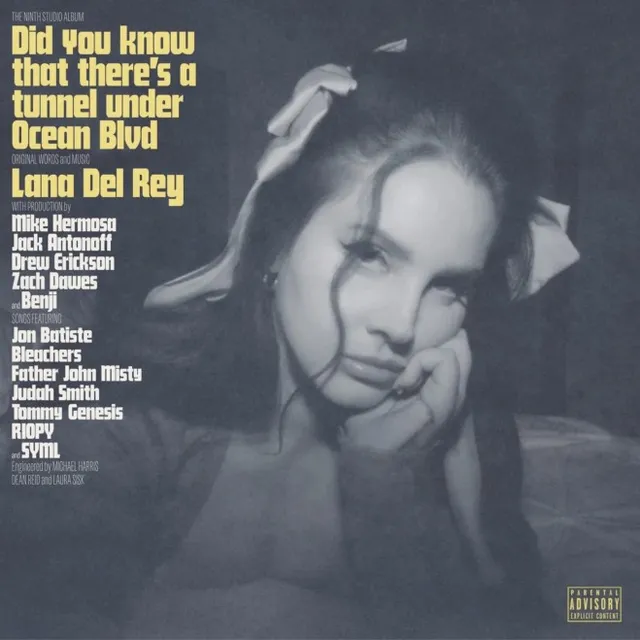
Did You Know That There’s a Tunnel Under Ocean Blvd
- Artist
- Lana Del Rey
- Written
- Language
- Chinese, with an English translation
English translation
Machine-assisted translation of Vanessa’s Chinese original.
Parts of this album don’t sound like finished songs. The voice is still practicing, a sentence turns somewhere else halfway through, and after a very private memory a joke suddenly follows that leaves you baffled. Lana hasn’t tidied these things up to look especially presentable. After listening for a while, I felt that this untidiness suits what she wanted to write about this time.
The Grants begins with a fragment of backing vocals rehearsing. Voices come in, stop to adjust, and by the time the real singing starts, the ear has already gotten to know these few people. It is a good opening. The album is going to talk about family, parting and memory, and first letting the act of singing carry some traces of people being together is far more effective than explaining the theme with grand strings.
Grant is her surname. Putting this name in the first song also gives the narration that follows a different weight. What she wants to keep is pieces of her family, the memories that, once mentioned, can take a person back to a certain moment. The gospel harmonies slowly lift up the lead singer, sounding like the comfort of faith and also like very practical reluctance to let go. What a person can finally take with them: this question isn’t sung as anything mysterious here.
The title song turns this fear toward herself. By the sea there is a tunnel that has been sealed and forgotten, the beauty of the past is still inside, and people outside no longer pass by. This metaphor suits Lana especially well. She has always been good at describing beautiful things, but this time beauty itself can’t guarantee being remembered. The piano and strings spread the song wide, the voice slowly rises in the middle, and that request becomes more and more direct.
I like that there is a bit of unwillingness in this song. Hoping to be remembered, wanting to be loved, and wanting to keep having value after body and time have both changed: these wishes aren’t always elegant. She doesn’t cover for herself. The better the chorus sounds, the more you can hear her resistance to disappearing.
Sweet is easy to overlook among the first few songs, but it actually says ahead of time many of the album’s later questions. After two people like each other, can they really put their lives together, and are their ideas about family, children and the future close. She asks slowly and the melody is relaxed, but these questions are hard to deal with by saying one romantic line. By this album, love already has to face the concrete arrangements of life.
A&W then tears the patience open all at once. In the first half the acoustic guitar and piano are sparse, and Lana’s voice moves forward pressed close to the song. The narration has bodies in it, shame, and judgments others have forced onto her. She talks about whether she will be believed after being hurt, and her tone is not even especially agitated. This calm makes it harder to bear. The person speaking seems to already know that explaining may not help.
The most impressive thing about this song is that it doesn’t push the frankness of the first half into a beautiful big chorus. The music suddenly turns into low frequencies and looping vocals, and the second half becomes sticky, messy, and a bit deliberately silly. Those repeated names and short phrases seem to occupy the place where thinking would be. The person who was just seriously telling her story now lets the voice run, and no longer gives a coherent explanation.
I’m not very willing to simply read this turn as her finally gaining freedom. There is also numbness here, amusing herself, and a bit of vengeful pleasure. She knows how others want to see her, and she simply pushes that image further. The hurt before doesn’t disappear because the beat comes in. It stays under the noise that follows. Over seven minutes, the song lets two states hold at once.
Judah Smith Interlude follows here, and it really is uncomfortable to listen to. A long sermon interrupts the song, male voices discuss desire and morality, and the experiences Lana just described, which are hard to hear properly, are still in my ears. This ordering makes me think about who has the right to interpret a person’s life, and who can only keep defending their own.
I can understand the conflict this stretch of sound creates in the album, and I still find it too long. It takes up too much attention, and on a first listen especially it easily drives away the feeling that has just been built. Keeping this discomfort may be intentional, but intentional doesn’t mean I’m willing to listen to all of it every time.
The piano of Candy Necklace pulls the music back. The melody circles round and round, the voice rises and falls with it, and there is a feeling of already knowing the relationship isn’t quite right and still not being able to stop. Jon Batiste joining doesn’t turn it into a light duet between a man and a woman; his voice and the piano both take part in this entanglement. Jon Batiste Interlude then loosens up some, and the laughter, shouts and improvised reactions bring the people in the studio back.
When the album gets to Kintsugi and Fingertips, I find myself listening more attentively without meaning to. These two don’t have a conspicuous structural turn like A&W, but they carry almost the heaviest part of the whole album.
Kintsugi borrows the image of kintsugi. A vessel is repaired after it breaks, the marks remain on the surface, and even when mended it won’t go back to what it first was. A metaphor like this is easily written as a comforting line about trauma making people more beautiful, and fortunately Lana spends more time writing about the death of a loved one, her family’s reactions, and how she feels inside it. A crack first of all means loss, and the listener has no chance to jump easily to a nice conclusion.
The piano is played with a lot of space, the melody stretches out slowly, and when she sings about specific people there is a feeling in her voice of trying to stay calm. The images of light therefore have weight. A person has to first admit that they have really been changed before they can go on feeling things in life. Whether the change is worth it, she doesn’t decide for the listener.
Fingertips is closer to a piece of self-talk that keeps extending forward. The melody adjusts to the length of the sentences, and there is no regular chorus waiting to contain the feeling. She mentions family, lost relatives, her relationship with her mother, and also worries whether she can become a mother. Things aren’t arranged in order of time, and when one memory touches another, it just walks straight over.
This song is hard to take as background music. It doesn’t hold people with a particularly eye-catching hook, and you even need to actively follow the names and relationships. I like that it doesn’t turn the private narration into a story anyone can step into at once. Some details belong to her, and a stranger listening needs to keep a little distance. We don’t have to have exactly the same experience to understand why a person can’t stop when talking about a certain thing.
Putting these two together also changed my understanding of the family imaginings in Lana’s songs. She keeps talking about belonging, about a place where one can stay, and it isn’t only that she likes the picture of some traditional life. She knows hurt can happen at home too, and knows a person may never get the response they want most. Even so, she still imagines a different kind of family relationship. There are many misgivings in this wish.
Paris, Texas finally lets the air move. The piano phrase taken from SYML loops lightly, like a person walking, with thoughts changing direction along with it. The place names bring distance, but no guarantee that leaving will solve things. I like the very light way this song is sung, almost with no intention of persuading anyone, as if she is slowly realizing herself that some places can no longer be stayed in.
Grandfather Please Stand on the Shoulders of My Father While He’s Deep-Sea Fishing brings the names of family into a plea again. The song title is a bit clumsy in length, but after reading it you can feel a very specific relationship of leaning on someone. The music gradually unfolds, and while Lana talks about her own work, she asks even older relatives to look after her. She hopes to be understood correctly, and also admits she needs help.
Let the Light In is the most comfortable breath in the second half. The texture of the acoustic guitar and Father John Misty’s harmonies make the warmth between the two people feel very real. The relationship still has its ups and downs, but the song itself is in no hurry to argue. Margaret has a similar looseness, with the melody walking unhurried and the blessing carrying the casualness between people who know each other well. These two songs made me feel that the album, for all it has talked about death, hasn’t lost its interest in everyday pleasures.
The last three turn in another direction again. Fishtail uses vocal processing and beats to slowly reveal the distrust inside tenderness. Peppers simply becomes a bit absurd, with samples, fragmented sentences and ambiguous jokes all crowded in. After so much frankness before it, its flippancy actually lets people breathe out. A person who has talked seriously about death can of course still say some things that matter less.
Taco Truck x VB finally connects back to Venice Bitch, as if she has taken back part of herself from her old work. A familiar melody enters a darker, heavier beat, and the past isn’t sealed up as it was, and can keep being taken apart and remade. Ending this way suits an album that worries about forgetting. She is still using those memories, so they are still alive in new songs.
Ocean Blvd is long, I skip some of the interludes, and I don’t like every song equally. But I like that it is willing to leave the contradictions in. Lana can seriously consider family and death a few minutes earlier, and a few minutes later sing in a scattered, lustful, self-centered way. Only with these parts put together does she have the weight of a whole person. After listening, the tunnel metaphor actually matters less. I have already remembered many of the voices inside.
Chinese original
这张专辑有些地方听起来不像已经写完的歌。人声还在练习,话说到一半又拐向别处,一段很私人的回忆后面,突然跟上一句让人摸不着头脑的玩笑。Lana 没有把这些东西整理得特别体面。听久了,我反而觉得,这种不整齐很适合她这次想写的内容。
The Grants 开头留下了伴唱排练的片段。声音进来,又停下调整,等到真正唱起来,耳朵已经先认识了这几个人。这是个很好的开场。专辑要谈家人、离别和记忆,先让歌唱这件事带上一点人与人相处的痕迹,比直接用宏大的弦乐来说明主题有效得多。
Grant 是她的姓。把这个名字放在第一首,也让接下来的叙述有了不同的分量。她想保留的是家人的片段,是那些只要提起来,就能让一个人重新回到某个时刻的记忆。福音和声慢慢托起主唱,听起来有信仰的安慰,也有非常实际的舍不得。人最终能带走什么,这个问题在这里没有被唱得很玄。
同名曲则把这种害怕转向自己。海边有一条被封闭、被遗忘的隧道,过去的美仍然在里面,外面的人已经不再经过。这个比喻特别适合 Lana。她一直很会描写美丽的东西,这次美丽本身却不能保证被记住。钢琴和弦乐把歌曲铺得很宽,人声在中间缓慢上升,那种请求越来越直接。
我喜欢这首歌里有一点不甘心。希望别人记得自己,想被爱,也想在身体和时间都发生变化后继续拥有价值,这些愿望并不总是优雅的。她没有替自己遮掩。副歌越是好听,越能听出她对消失这件事的抵触。
Sweet 比较容易在前几首之间被忽略,但它其实提前说出了专辑后面的很多问题。两个人喜欢彼此以后,究竟能不能把生活放到一起,对家庭、孩子和未来的想法是否相近。她问得很慢,旋律也宽松,可这些问题很难用一句浪漫的话应付过去。到了这张专辑,爱情已经必须面对生活的具体安排。
A&W 则把耐心一下子撕开。前半段的木吉他与钢琴很稀疏,Lana 的声音贴着歌曲往前走,叙述里有身体、有羞耻,也有别人强加在她身上的判断。她谈到遭受伤害后是否会被相信,语气甚至没有特别激动。这样的平静让人更难受。说话的人似乎已经预先知道,解释未必有用。
这首歌最厉害的地方,是它不把前半段的坦白顺势推向一个漂亮的大副歌。音乐突然转进低频和循环的人声,后半段变得黏、乱,又有点故意胡闹。那些重复的名字和短句像是占住了思考的位置。刚刚还在认真讲述自己的人,现在让声音跑起来,不再给出连贯的解释。
我不太愿意把这个转折简单理解成她终于获得了自由。这里也有麻木、自我消遣和一点报复性的快乐。她知道旁人想怎样看她,索性把那套形象推得更过分。前面的伤害没有因为节拍进来就消失,反而一直留在后面的热闹下面。七分钟里,歌曲让两种状态同时成立。
Judah Smith Interlude 接在这里,听感确实不舒服。长时间的布道打断了歌曲,男性声音在讨论欲望和道德,刚才 Lana 那些难以被好好听见的经验却还留在耳边。这样的顺序会让我想到,谁有权解释一个人的生活,谁只能不断为自己的生活辩护。
我能理解这段声音在专辑里制造的冲突,也还是觉得它偏长。它占据了太多注意力,第一次听时尤其容易把刚建立起来的情绪赶走。保留这种不适可能是有意的,但有意并不意味着我每次都愿意完整听完。
Candy Necklace 的钢琴把音乐重新拉回来。旋律一圈圈绕,人声跟着起伏,有一种已经知道关系不太对,却仍然停不下来的感觉。Jon Batiste 的加入没有把它唱成轻松的男女对唱,他的声音与琴声都参与了这种纠缠。后面的 Jon Batiste Interlude 又松开了一些,笑声、呼喊和即兴的反应,让录音室里的人重新出现。
专辑走到 Kintsugi 和 Fingertips,我会不自觉地更专心。这两首没有 A&W 那样显眼的结构转折,却几乎承担了整张专辑最重的部分。
Kintsugi 借用了金缮的意象。器物破裂后被修补,痕迹留在表面,修好也不会变回最初的样子。这样的比喻很容易被写成一句关于创伤让人更美的安慰话,好在 Lana 花了更多时间写亲人的死亡、家人的反应,以及自己身在其中的感受。裂痕首先意味着失去,听者没有机会轻易跳到美好的结论。
钢琴弹得很留白,旋律缓慢舒展,她唱起具体的人,声音里有一种努力维持平静的感觉。那些关于光的意象因此有了重量。一个人要先承认自己确实被改变,才有可能继续感受生活里的东西。至于改变是否值得,她没有替听者作决定。
Fingertips 更接近一段不断往前延伸的自言自语。旋律随着句子长短调整,没有一个规整的副歌等着把情绪收住。她提到家人、失去的亲人、与母亲之间的关系,也担心自己能否成为母亲。事情并不按时间排好,记忆碰到另一个记忆,就直接走过去了。
这首歌很难被当作背景音乐。它不靠特别醒目的钩子留住人,甚至需要主动跟着那些名字和关系听。我喜欢它没有把私人叙述处理成人人都能立刻代入的故事。有些细节属于她自己,陌生的听者需要保持一点距离。我们不必拥有完全相同的经历,也能理解一个人为什么会在说到某件事时停不下来。
这两首放在一起,也改变了我对 Lana 歌里那些家庭想象的理解。她反复谈归属、谈一个可以留下来的地方,并不只是喜欢某种传统生活的画面。她知道家里也会发生伤害,知道人可能永远等不到最想要的回应。即使如此,她还是会想象另一种家庭关系。这份愿望里有很多顾虑。
Paris, Texas 终于让空气流动起来。取自 SYML 的钢琴乐句轻巧地循环,像人在走动,念头也跟着换了方向。那些地名带来距离,却没有保证离开就能解决事情。我喜欢这首歌很轻的唱法,几乎没有说服谁的意思,像是她自己慢慢意识到,某些地方已经待不下去了。
Grandfather Please Stand on the Shoulders of My Father While He’s Deep-Sea Fishing 又把家人的名字带进祈求。歌名长得有些笨拙,读完却能感到一种很具体的依靠关系。音乐逐渐展开,Lana 一面谈自己的创作,一面向更久远的亲人请求照看。她希望被正确地理解,也承认自己需要帮助。
Let the Light In 是后半段最舒服的一次呼吸。木吉他的质地和 Father John Misty 的和声,让两个人相处的温度变得很实在。关系仍然有反复,但歌本身不急着争执。Margaret 也有类似的松弛,旋律不紧不慢地走,祝福里带着熟人之间的随意。这两首让我觉得,专辑并没有因为谈了这么多死亡,就失去对日常快乐的兴趣。
最后三首又转了方向。Fishtail 用人声处理和节拍,把温柔里的不信任慢慢露出来。Peppers 干脆变得有点荒唐,采样、碎片化的句子和暧昧的玩笑全都挤进来。它的轻佻放在前面那么多坦白之后,反而让人松口气。一个人认真谈过死亡,当然也仍然可以说些没那么重要的话。
Taco Truck x VB 最后接回 Venice Bitch,像是她从旧作品里拿回了一部分自己。熟悉的旋律进入更暗、更重的节拍,过去没有被原样封存,也可以继续被拆开、重做。用这样的方式收尾很适合一张担心遗忘的专辑。她还在使用那些记忆,它们就还活在新的歌里。
Ocean Blvd 很长,某些间奏我会跳过,也并非每首都同样喜欢。但我喜欢它愿意把矛盾留着。Lana 可以在几分钟前认真考虑家庭和死亡,几分钟后又唱得散漫、好色、自我中心。这些部分放在一起,她才有了一个完整的人的重量。听完以后,隧道的比喻反而没那么重要了。我已经记住了里面的许多声音。