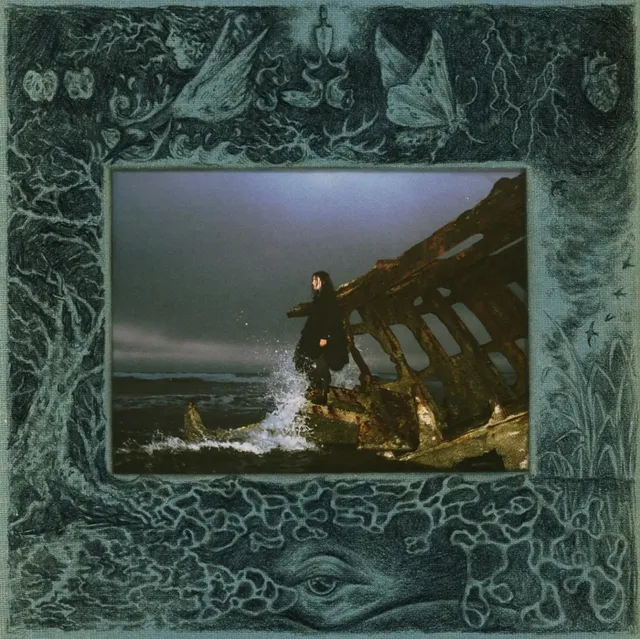
Death in the Business of Whaling
- Artist
- Searows
- Written
- Language
- Chinese, with an English translation
English translation
Machine-assisted translation of Vanessa’s Chinese original.
Searows’ voice has a very particular sense of distance. He sings softly, yet he isn’t far away, as if he has already come to stand in front of you and just doesn’t want to say the words loudly. Death in the Business of Whaling enlarges the instruments around him, and this trait becomes even more obvious. The drums and guitars can get very heavy, and his voice still keeps its fragile edge.
Belly of the Whale draws a dark space for the album right from the start. The melody slowly builds pressure through repetition, the parts pile up gradually, and the singing doesn’t become more certain along with them. The whaling in the album’s title easily makes people think of a human struggling against something huge, but these songs don’t need to be explained one by one as stories at sea. Being trapped, being swallowed, being unable to decide where you are going: that is already close enough to what they feel like.
The name Kill What You Eat is direct, but the song doesn’t release its aggression entirely outward. It sounds more like a person constantly checking his own desires, where even wanting to live, or wanting to get something, can bring self-blame. The repeated phrases make this checking endless. Alec Duckart rarely sings a line with particular force, so the stresses stand out more, and a slight added weight is enough to make you stop and listen.
Photograph of a Cyclone is one of the easier songs to get close to in the first half. The rhythm has a forward momentum, and the melody leaves an impression more quickly. It reminds me of the contradiction of fitting something huge and chaotic into one photograph. A photograph can be held in your hand, and what happened still goes far beyond that frame. The title offers this way in, and the music keeps an unsettled flow.
Hunter makes this unease heavier. The drums and the low end press down, the guitar keeps making friction behind them, and the relationships between the sounds carry clear tension. Searows doesn’t suddenly become a singer who always has to burst out just because a full band has been added. He often lets the accompaniment say the heavy things for him, while he stays with that thinner line of voice.
Dirt is a pause I like a lot. The grain of the plucked strings is clear and the melody is not complicated, so the thought of death and of the body returning to the earth lands very close. It is in no hurry to discuss how much meaning a person leaves behind, and is more about admitting that people really do have a day when they disappear. Singing reaches this point, and the sounds on the album about chasing, consuming and controlling seem to get a little quieter for a while.
Dearly Missed slowly stretches this space out again. The low sound of the drums keeps building, and the singing gradually leaves its original soft position. The change here is very effective, because he hasn’t used up all his strength before, and only when he finally sings rougher and tighter does the voice have the feeling of being pushed into a corner. I like that he doesn’t always protect his tone, and allows some lines to be less pretty.
Junie and In Violet follow, still circling around closeness and helplessness. Wanting to take on something for another person and really being able to help them are two things that are hard to match. The album seems more mature in these places, where care may be mixed with possessiveness, and companionship may hide a reliance on being needed. It doesn’t treat tenderness as a certificate that automatically excuses responsibility.
Still, after listening to the whole album, I also feel that the shadows of several songs are somewhat alike. The reverb, the slowly growing volume, and the way the breathy voice comes in, once used repeatedly, sometimes blur the borders between songs. Its most convincing parts often happen when the sound really changes, such as the vocals in the latter part of Dearly Missed, and not just when the accompaniment gets one more layer thicker.
Geese is a fitting final song. The music leaves more places to breathe, and after all the pressure before it, coming back to a relatively plain way of expressing things makes it feel like the voice has finally found somewhere to stand. The album doesn’t give a very definite conclusion, but at least it puts attention back from those huge things that cannot be conquered into a range a person can feel.
This is also why I like Searows. However dark he writes, there is still a very specific kind of consideration, as if he knows that some words can’t be rushed out of someone. The addition of the full band broadened this album, but what really makes me willing to stay inside it is still the person who never becomes very loud.
Chinese original
Searows 的声音有一种很特别的距离感。唱得轻,位置却不远,像是已经站到你面前,只是不太愿意把话说响。Death in the Business of Whaling 把周围的乐器放大以后,这个特点反而更明显了。鼓和吉他能够变得很重,他的声音仍然保留着脆弱的边缘。
Belly of the Whale 一开始就给专辑划出了一个偏暗的空间。旋律在重复里慢慢形成压力,声部逐渐堆起来,歌声却没有跟着变得笃定。专辑名里的捕鲸很容易让人联想到人与庞大事物的对抗,不过这些歌并不需要被逐首解释成海上的故事。被困住、被吞没、无法决定自己的去向,已经足够贴近它们的情绪。
Kill What You Eat 的名字很直接,歌曲却没有把攻击性完全朝外释放。听起来更像一个人不断检查自己的欲望,连想要活下去、想要得到一点东西,都可能引出自责。重复的乐句让这种检查变得没完没了。Alec Duckart 很少把一句话唱得特别用力,重音反而因此更显眼,稍微加重一点就会让人停下来听。
Photograph of a Cyclone 是前半段比较容易靠近的一首。节奏有向前行的惯性,旋律也更快留下印象。它让我想起把一件巨大、混乱的事情收进一张照片的矛盾。照片可以拿在手里,发生过的事仍然远远超出那个边框。歌名提供了这样的入口,音乐又保留了一种不太安定的流动。
Hunter 把这种不安变得更有重量。鼓与低频压下来,吉他在后面持续制造摩擦,声音之间的关系带着明显的紧张。Searows 没有因为加入完整的乐队配置,就突然变成一个总要爆发的歌手。他常常让伴奏替自己把话说重,自己只守着那条比较细的人声线。
Dirt 是我很喜欢的停顿。拨弦的颗粒清楚,旋律也不复杂,死亡与身体回到土地的念头因此落得很近。它没有急着讨论一个人留下了多少意义,更多是在承认人确实有消失的一天。唱到这里,专辑里那些关于追逐、消耗和控制的声音,似乎都暂时小了一些。
Dearly Missed 又把这个空间慢慢撑开。鼓的低响持续累积,歌声也逐渐离开原本轻柔的位置。这里的变化很有效,因为前面一直没有把力气用尽,等他终于唱得更粗、更紧,声音里才有了被逼到某个地方的感觉。我喜欢他没有始终保护自己的音色,有些句子允许自己不那么好听。
Junie 和 In Violet 接在后面,仍然围绕亲近与无能为力打转。想要替另一个人承担,和真正有能力帮助对方,是两件很难对上的事。专辑在这些地方显得比较成熟,关心里可能混着占有,陪伴里也可能藏着对被需要的依赖。它没有把温柔当成一张能自动免除责任的证明。
不过,整张听下来,我也会觉得几首歌的阴影有些相似。混响、缓慢增长的音量、气声的进入方式,反复使用以后,歌曲之间的边界偶尔会变模糊。它最有说服力的部分,往往发生在声音真的产生变化的时候,例如 Dearly Missed 后段的人声,而不只是伴奏再厚一层。
Geese 放在最后是合适的。音乐留出了更多可以呼吸的位置,听完前面那些压迫,再回到相对朴素的表达,会觉得这个声音终于有了落脚处。专辑并没有给出一个非常确定的结论,但至少把注意力从那些无法征服的巨大事物,重新放回一个人能感受到的范围里。
这也是我喜欢 Searows 的原因。他写得再暗,仍然有一种很具体的体贴,像是知道有些话不能催着别人说完。全乐队的加入拓宽了这张专辑,真正让我愿意留在里面的,还是那个始终没有变得很响亮的人。